Your Big Year
Bruce Tuck | Swan Lake Bird Facts
March 2026
For those not interested in birding or bird photography, a Big Year can mean many things, but if you are one who enjoys creating lists of your bird sightings or rejoices in finally spotting your nemesis bird when you least expect it, the term 'Big Year' has a very specific meaning; one that for those a bit more competitive among us can easily get out of hand!

Common merganser (Mergus merganser)

Merlin (Falconidae)
It could involve travel to different countries, setting goals that may seem unachievable, and spending significant amounts of time and money just to get a bit closer to the world record!
Of course, with any official record comes a set of rules. The American Birding Association has rules for areas they represent. They include start and stop times (January 1 to Dec 31), checklists, species identification and confirmation, and their Birding Code of Ethics. The current world record is 6,852 species across 40 countries in a single year, and for North America alone the record is 840.
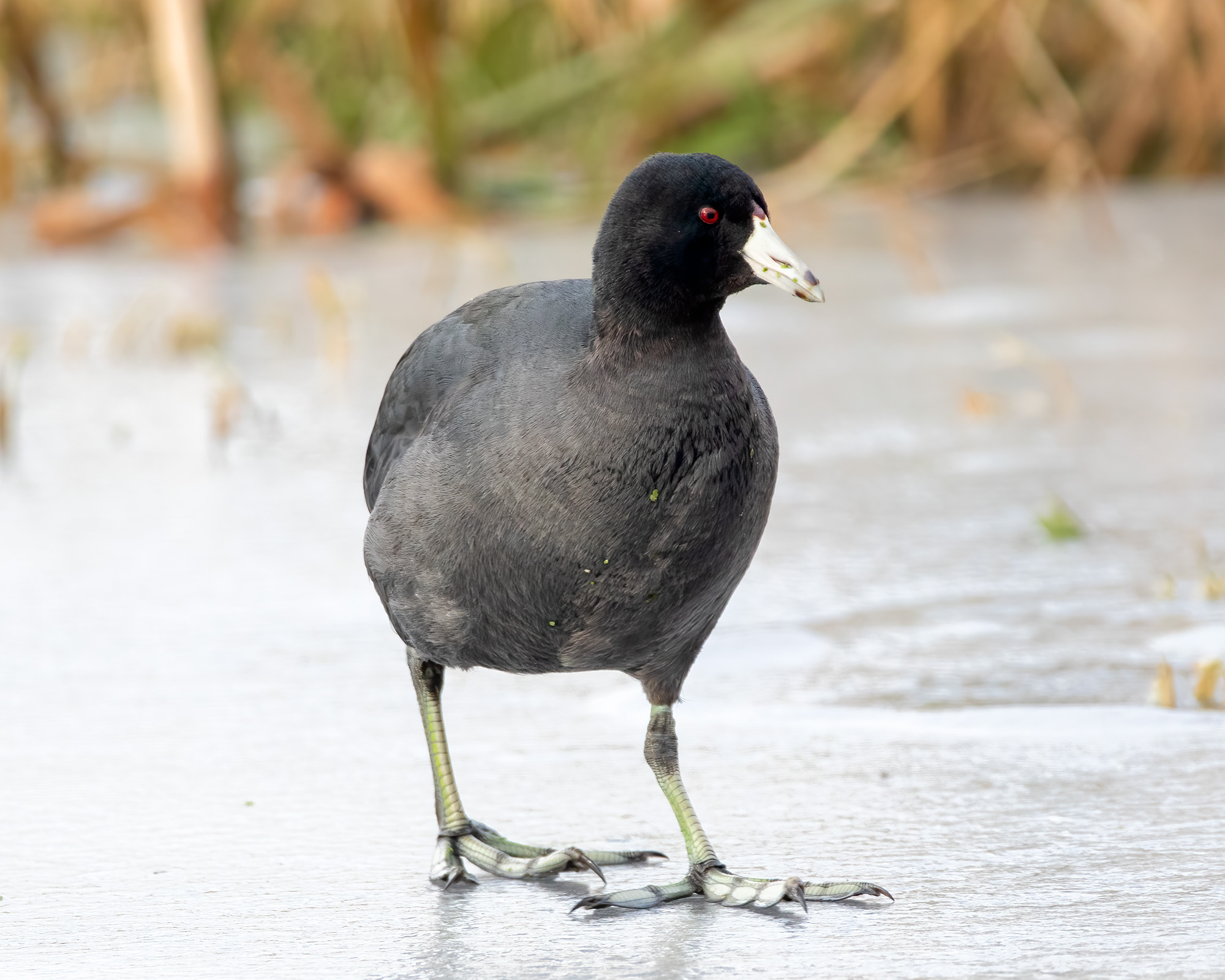
American coot (Fulica americana)

Spotted towhee (Pipilo maculatus)
These records of course are definitely out of touch for most of us, but that does not mean we can’t set our own goals and challenges.
Maybe you only want to explore your local city or province. You might want to get photographs of every species you see or get better photos of those already in your catalogue. You could use a Big Year as a way to add to your Life List of sightings or contribute to online resources such as eBird and Rare Bird Alerts.
You don’t have to start on January 1, any day will do. By setting the yearly time frame you will ensure that you have a chance to see the many species that call our local area home for only one or two seasons.

Barred owl (Strix varia)

Trumpeter swan (Cygnus buccinator)
Of course, this all has to be fun! The more we get out in nature the better we feel physically and mentally. Searching for new birds often brings us to previously unexplored local areas and adds a level of excitement and anticipation. The more species we see, the better our identification skills get. We realize the importance of habitat preservation and the stresses that wildlife has to cope with.

American bittern (Botaurus lentiginosus)

Double-crested cormorant (Nannopterum auritum)
The Nature Sanctuary is an excellent place to start your Big Year. Well over 200 species have been spotted and recorded over the years and 85 this year already! These include the common Spotted towhee, White-crowned sparrow, and Great blue heron. Bald eagles are fairly common, as are numerous species of gulls. It is always exciting when a Green heron or American bittern drops by. Good luck with your search!
Photo and Text Credit: Bruce Tuck | @BirdsInMyView
Submit your bird questions to visit@swanlake.bc.ca for a chance to have Bruce respond!