Migratory Birds: Long-distance Fliers
Bruce Tuck | Swan Lake Bird Facts
June 2026
Although it is quite variable, we are entering the latter portion of the annual spring bird migration. We have seen which birds typically migrate, the different types of migration, and some of the long-distance fliers; those that travel extreme distances every year in their search for food and breeding grounds.
How do they find their way and what dangers will they face along the way?
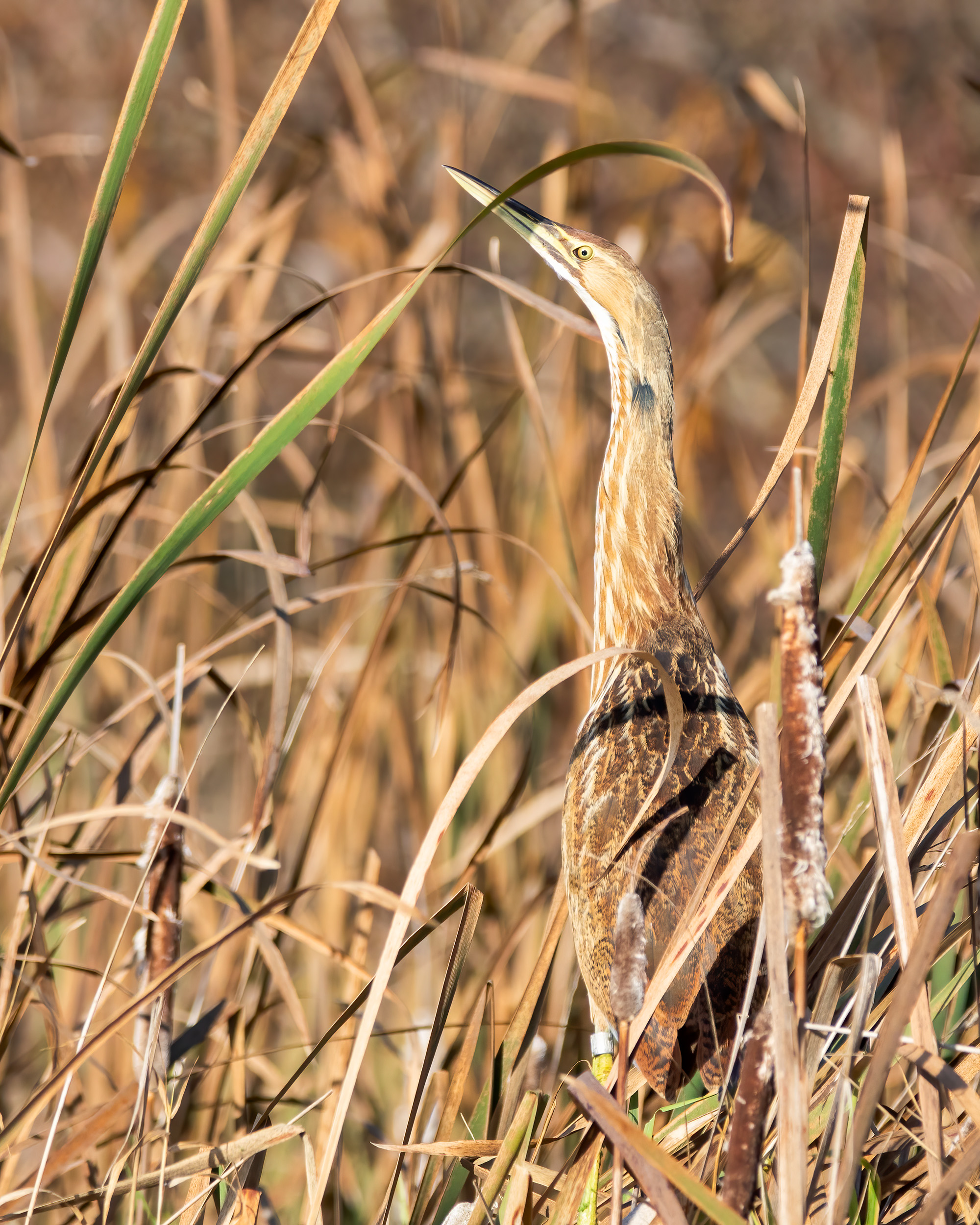
American Bittern (Botaurus lentiginosus)
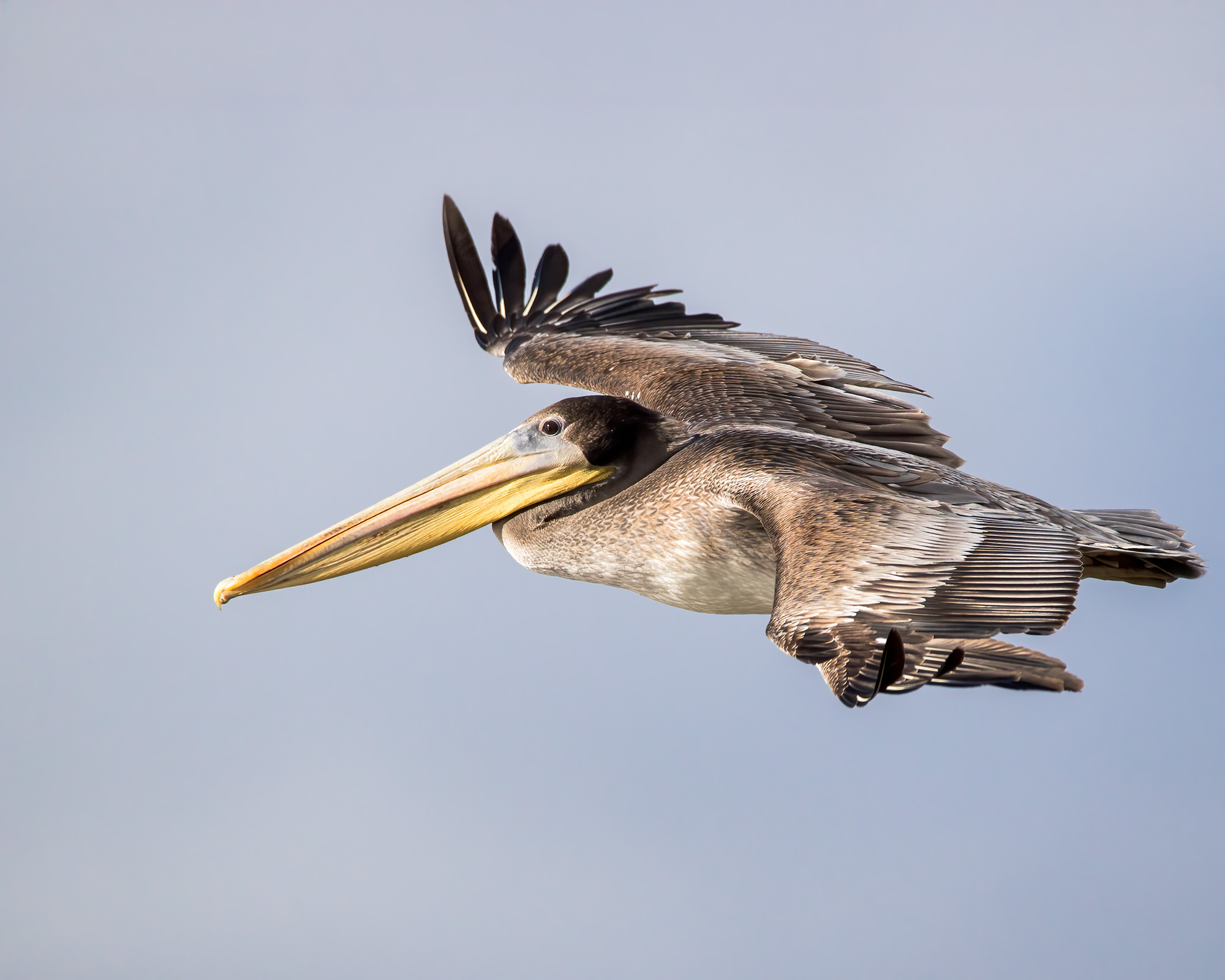
Brown Pelican (Pelecanus occidentalis)
As the seasons change and daylight hours get longer or shorter, an internal clock aided by the pituitary gland indicates it is time to prepare for migration. This phenomenon is called Zugunruhe, a German word that describes bird restlessness. Other factors such as the availability of food and weather are also in play.
As they head out to their new homes, they will need some help getting there. Birds use the position of the Sun, the rotation of the stars, the Earth’s magnetic field, and various landmarks to reach their final destination.
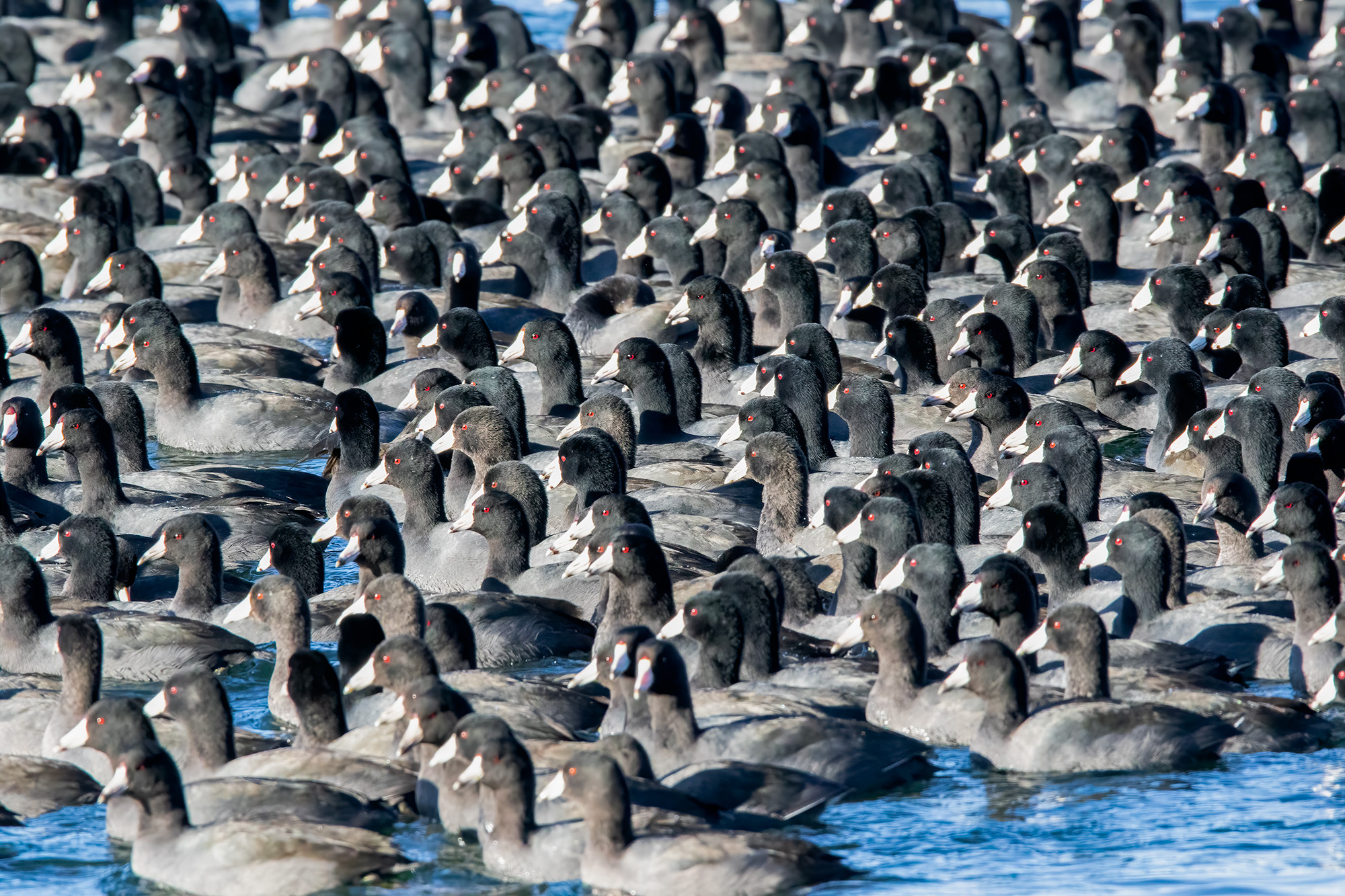
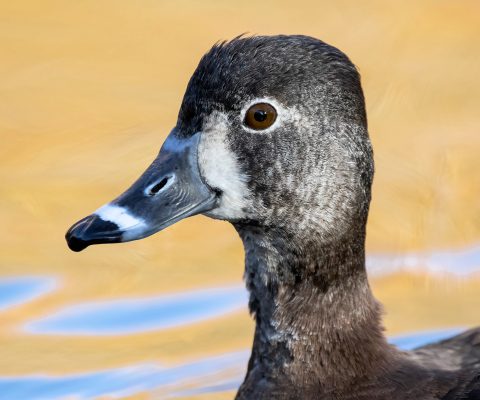
American Coot (Fulica americana)
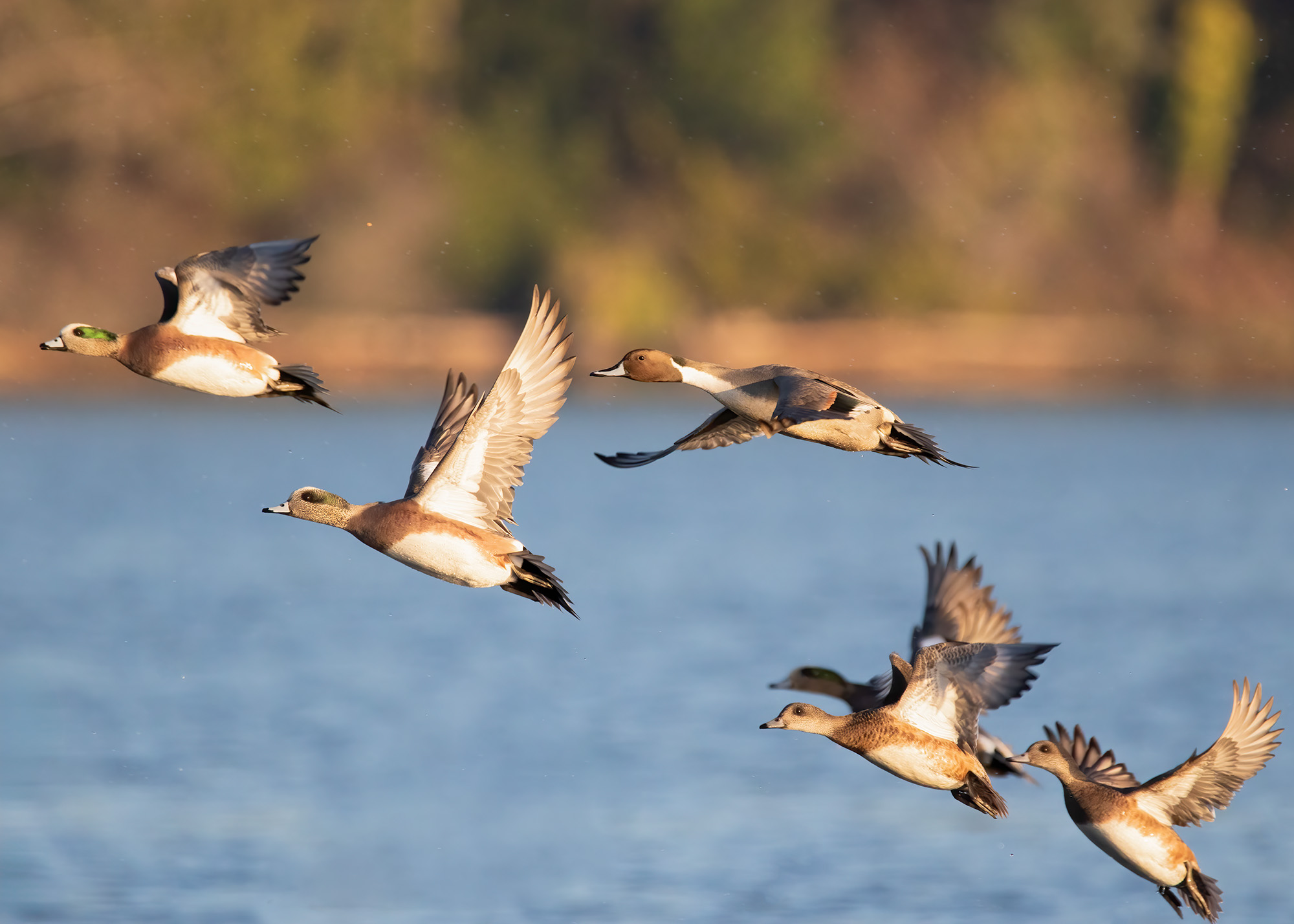
American Wigeon (Mareca americana) and Northern Pintail (Anas acuta)
Along the way they will face many dangers. A tremendous amount of energy is used for very long flights, so some species rely on wetland areas like Swan Lake Nature Sanctuary to provide food and shelter. Changing weather patterns can push them way off course, sometimes across oceans. On occasion we will see very rare birds locally and this is one of the major causes.
Bird fallout occurs when a localized severe weather system makes it impossible to fly, and hundreds or thousands of birds must land in a very localized area to wait out the storm. During migration, some species fly at night, and rest and replenish on the ground during the day. City lights can cause disorientation, and collision dangers occur as well.
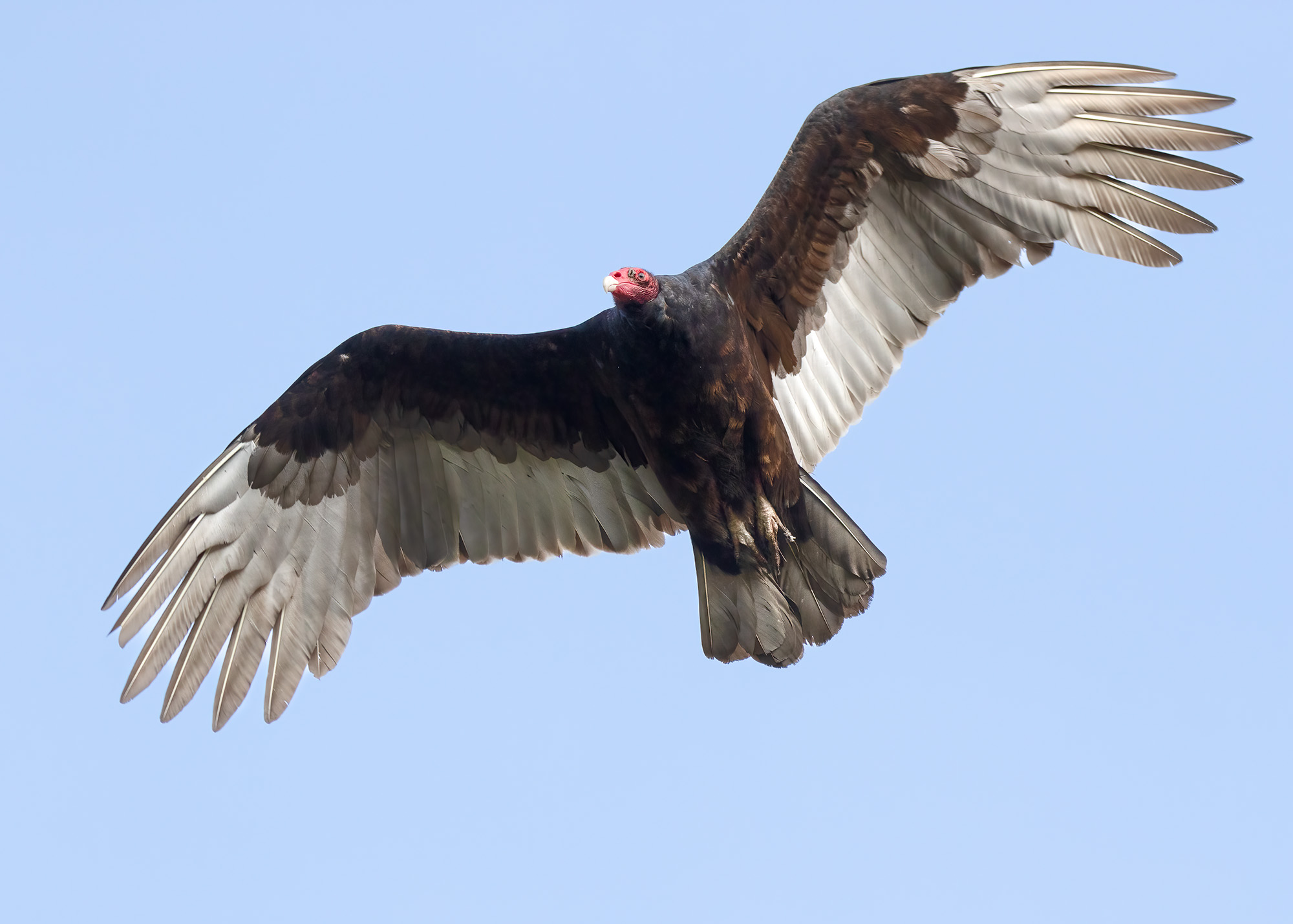
Turkey Vulture (Cathartes aura)
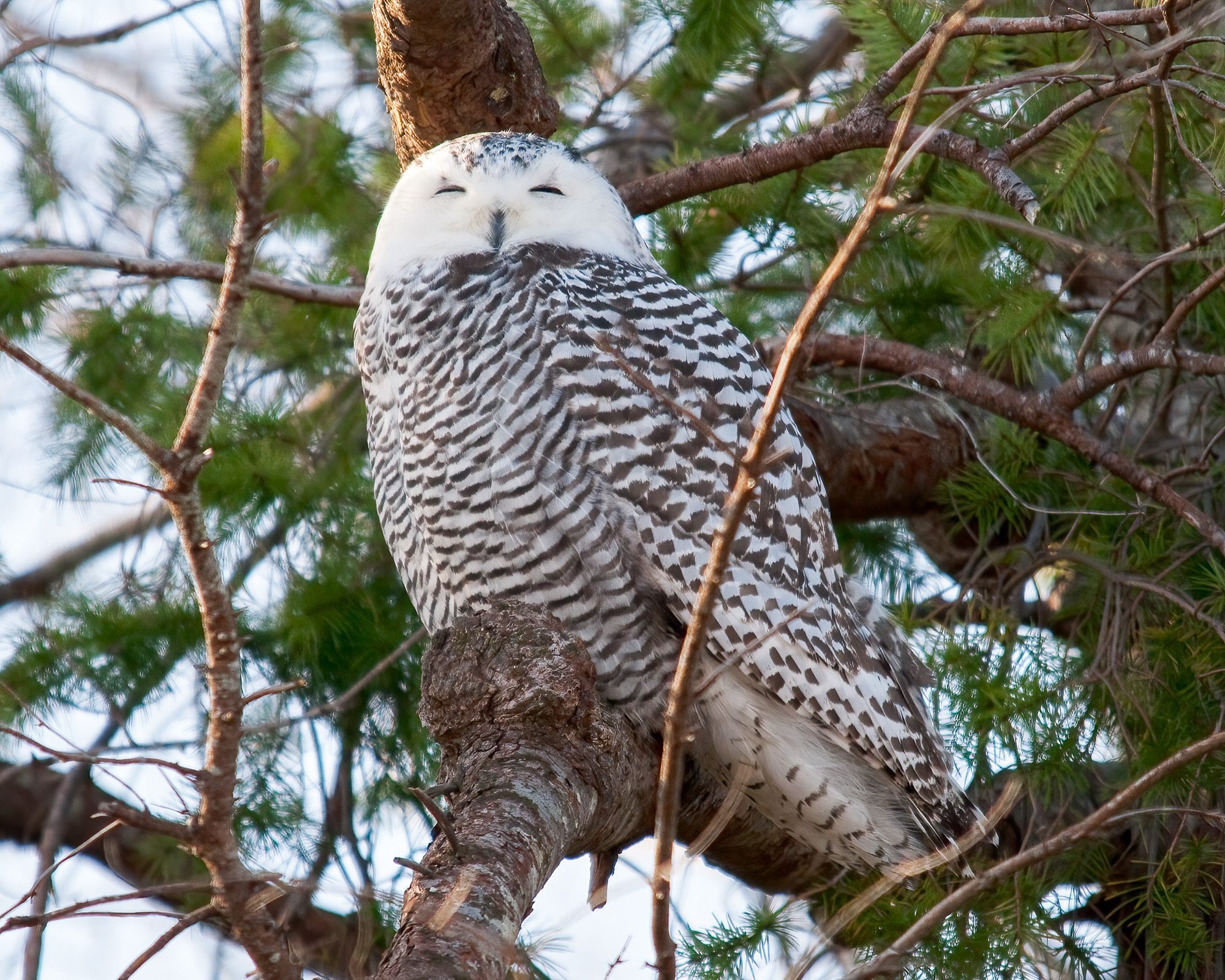
Snowy Owl (Bubo scandiacus)
Some bird species travel alone during migration and other form huge flocks that can have several species included. Several hundred Turkey Vultures can be seen kettling over East Sooke Park in the fall as they rise in the thermal column waiting for the right conditions to cross Juan de Fuca Strait.
While not really a form of migration, once every few years we can catch a glimpse of a Snowy Owl in our area. This is a result of an irruption in their northern nesting grounds where food is so plentiful that many more young birds than usual survive and move south for a time.
While the spring migration may be coming to an end, we have the fall to look forward to when the whole process starts up again!
Photo and Text Credit: Bruce Tuck | @BirdsInMyView
Submit your bird questions to visit@swanlake.bc.ca for a chance to have Bruce respond!