
Red-Flowering Currant
xʷixʷk̓ʷiɫč (lək ̓ʷəŋən)
Red-flowering currant (English)
hwihwukw’ (Hul’q’umi’num)
W̱IW̱QIȽĆ (SENĆOŦEN)
Groseille (French)
Ribes sanguineum (Scientific)
#3, 5
Lək ̓ʷəŋən plant names sourced from Living Labs project at UVic [URL Embedded]
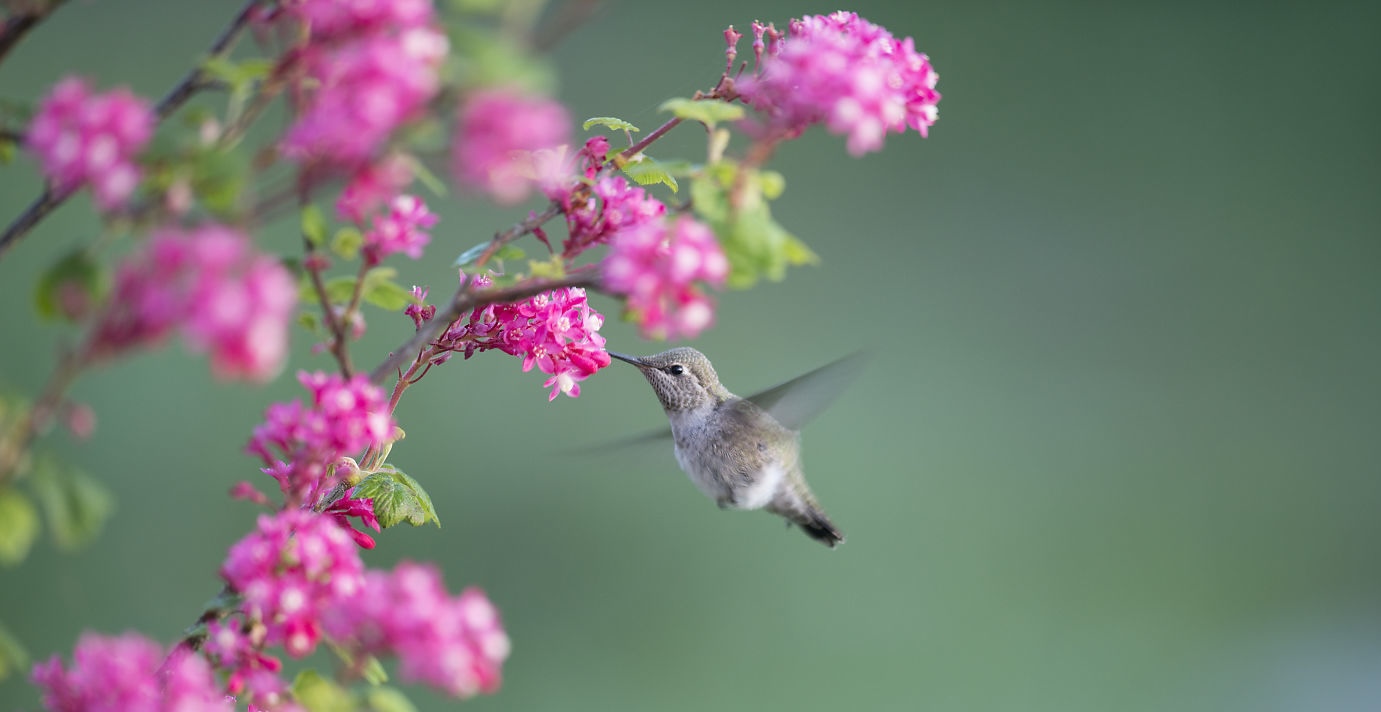
Red Flowering Currant is a beautiful deciduous shrub in the Gooseberry (Grossulariaceae) plant family. It is native to Western North America, with a range that extends from British Columbia down south to Washington, Oregon, and California. They bloom in the early spring, which coincides with the arrival of migratory Rufous Hummingbirds on Vancouver Island. If you plant one of these shrubs in your garden you will almost assuredbly see hummingbirds nectaring it in early March!
Identification:
- Deciduous multi-stemmed shrub,
- Grows up to 3m tall,
- The bark has pale brown lenticels (porous openings on the bark),
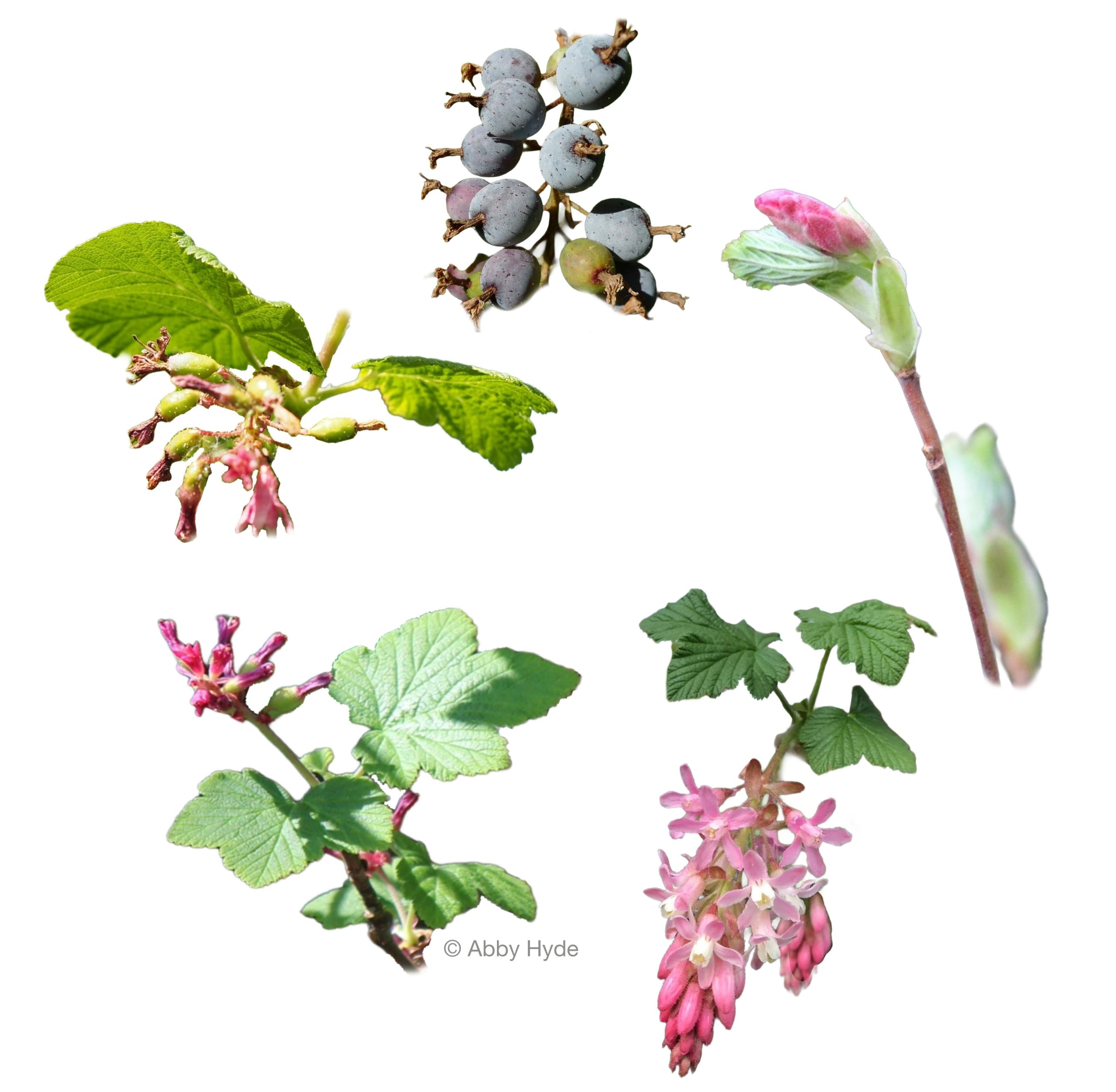
- Bright pink flowers with five petals,
- Flower clusters occur as dangling racemes with up to 30 flowers,
- Blooms early spring from March - May,
- Leaves are alternating with five lobes,
- The leaves have a strong resinous scent after it rains or if rubbed,
- Produces dark purple oval berries.
Habitat:
Red Flowering Currant prefers to grow in full sun - partial shade in well drained (mesic) soils. Ideal planting spots include under the canopy of a large Garry Oak or Douglas Fir where dappled sunlight comes through, beside a home under the edge of the roof, or at the edge of the forest. They are prone to root rot and powdery mildew if the soil is not able to dry out for periods of time during the summer.
Human uses:
The berries are edible raw, but taste better when cooked into jams or syrup. The flowers can be used to infuse beverages, giving them a light sweet taste and pretty pink colour.
Dispersal:
This species spreads via seeds that are present inside the dark purple fruits. Birds also eat the fruits, so they are carried to new location through their droppings (endozoochory).
These plant names and information are part of a Restorative Education project created by teachers Mx. Emily Menzies, Mr. Levi Wilson and their students from Shoreline Middle School, Colquitz Middle School, and Ditidaht Community School (2019-2024). For more information, please see www.restorativeducation.com/ .
The research and language knowledge shared have been assembled through several multi-year relationships with a number of Indigenous Language Holders.
The guidance we have received from these Language Holders is that this information is not to be shared or adopted by other groups or organizations. Their use is relational and each organization is encouraged to build and deepen their own connections through respectful and ethical engagement.
We hope you visit the Swan Lake Native Plant Garden and enjoy the culturally and ecologically significant native plants cultivated here on lək ̓ʷəŋən territories.