
Oceanspray / Iron Wood
q̓ét̓ᶱəɫč (lək ̓ʷəŋən)
Ocean spray / Ironwood (English)
Qeth’ulhp (Hul’q’umi’num)
KÁȾEȽĆ (SENĆOŦEN)
La spirée discolore (French)
Holodiscus discolor (Scientific)
#3,5,7
Lək ̓ʷəŋən plant names sourced from Living Labs project at UVic [URL Embedded]
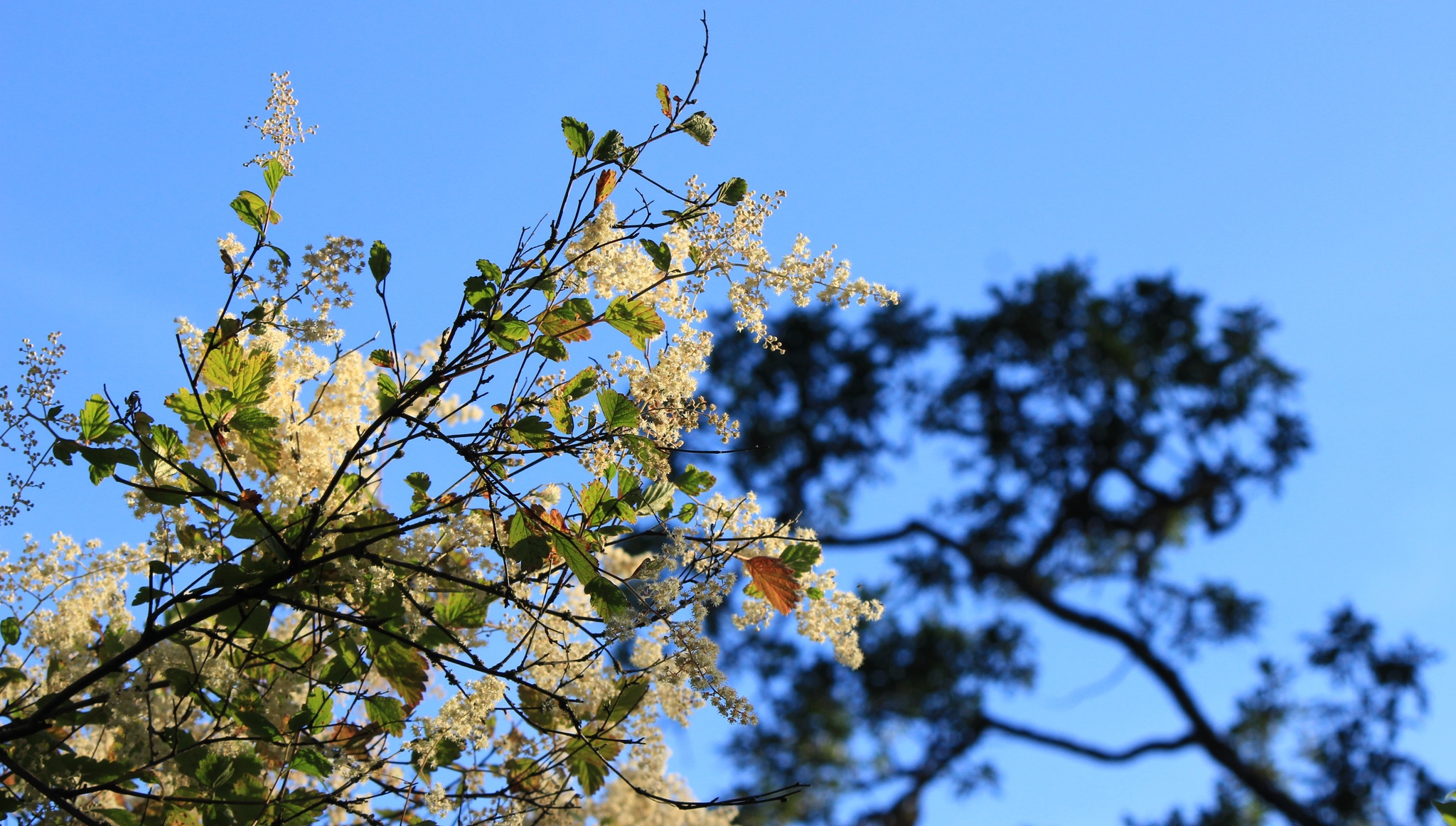
Oceanspray is a wonderful deciduous shrub in the rose (Rosaceae) plant family. It is native to Western North America, with a range that extends from British Columbia down south to Washington, Oregon, and California. It also extends Eastward as far as Colorado and New Mexico. It blooms mid-summer with large clusters of small white flowers. When it is in full bloom is can make quite a visual statement, making it great for hedgerows. Many small pollinators are attracted to this species, and in the winter birds feed off of the seed heads. Most importantly, Oceanspray is a host plant for many native butterflies: Lorquin's Admiral, Pale Tiger Swallowtail, and Spring Azure. If you plant this species in your garden or are going to a hike, keep your eyes out for small eggs on the underside of the leaves!
Identification:
- Deciduous branching shrub,
- Grows up to 2m tall and 1.2–1.5m wide,
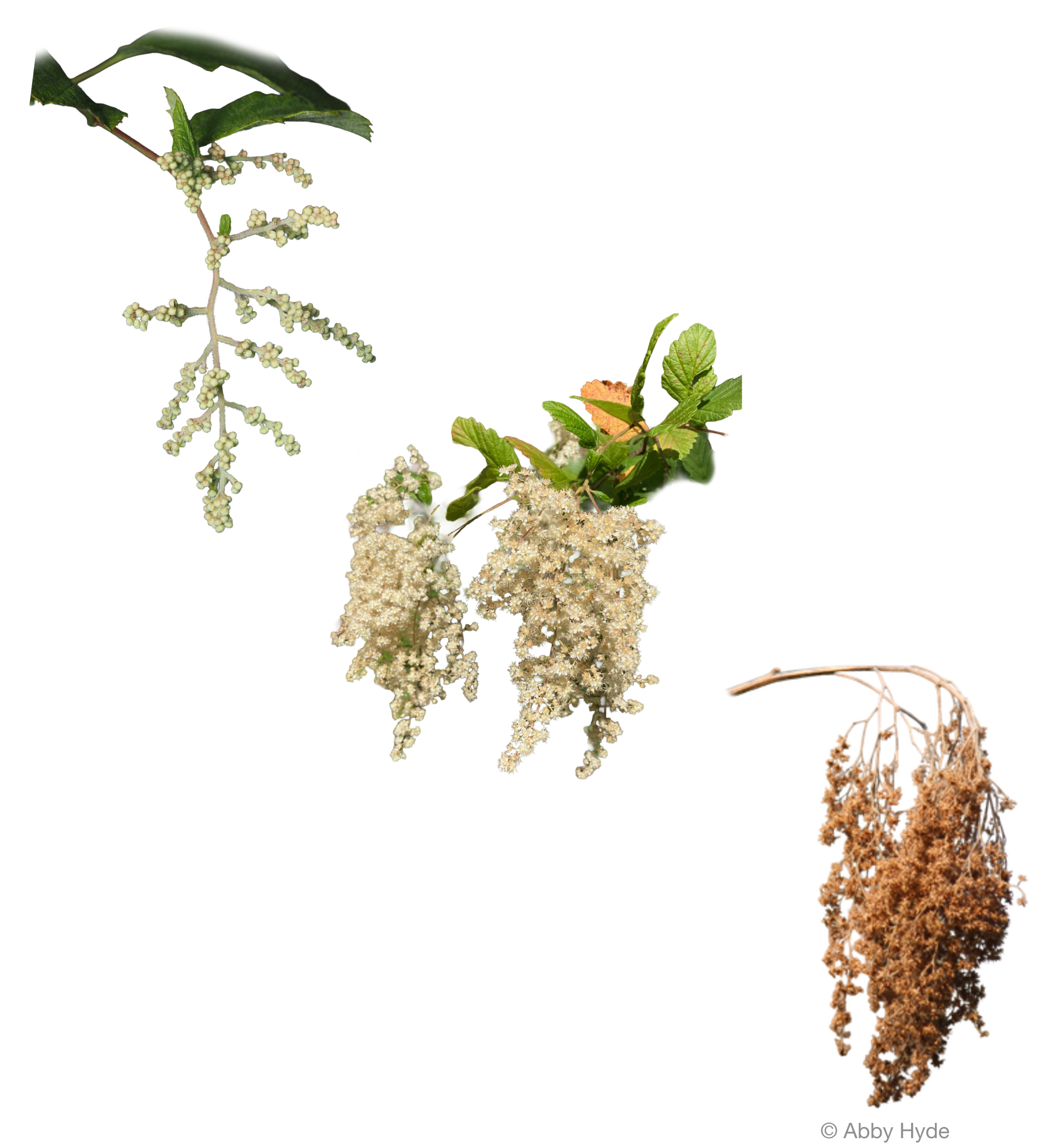
- Large clusters of small white flowers with five petals,
- Blooms May - July,
- Seed heads droop from the branches,
- Alternate leaves are small (5–9cm),
- Flowers have a light scent.
Habitat:
Prefers to grow in full sun - partial shade in dry to mesic (well drained) soils. It can be planted/ found in a variety of habitats from coastal forests to drier rocky mountainous slopes. Typically, this shrub is an understory species, but it can also be found in open areas.
Dispersal:
This shrub is not rhizomatous and spreads only by seeds.
These plant names and information are part of a Restorative Education project created by teachers Mx. Emily Menzies, Mr. Levi Wilson and their students from Shoreline Middle School, Colquitz Middle School, and Ditidaht Community School (2019-2024). For more information, please see www.restorativeducation.com/
The research and language knowledge shared have been assembled through several multi-year relationships with a number of Indigenous Language Holders.
The guidance we have received from these Language Holders is that this information is not to be shared or adopted by other groups or organizations. Their use is relational and each organization is encouraged to build and deepen their own connections through respectful and ethical engagement.
We hope you visit the Swan Lake Native Plant Garden and enjoy the culturally and ecologically significant native plants cultivated here on lək̓ʷəŋən territories.