Beaks or Bills?
Bruce Tuck | Swan Lake Bird Facts
February 2026
Is it a “beak” or a “bill”? Really, the words are synonymous. Many have used “beak” to refer to songbirds and “bill” for birds like ducks but for our purposes we will use “bill” as we explore these multi-functional features that are so important to bird survival.
Bills are extensions of the skull made up of very hard keratin that grows continuously. Usually there are two holes called nares that connect to the respiratory system. While birds like eagles and owls often use their feet to capture or hold prey, most don’t so they rely on their bills to pick up and break down their food.
Here is a look at some common local species that illustrates the many different ways birds use their bills.

Anna's hummingbird (Calypte anna)

Barred owl (Strix varia)
Hummingbirds have long bills that they use to get deep into flower structures. The tongue forks at the tip and extracts nectar. Look closely and you will often see pollen on their bills and heads that they transfer from flower to flower.
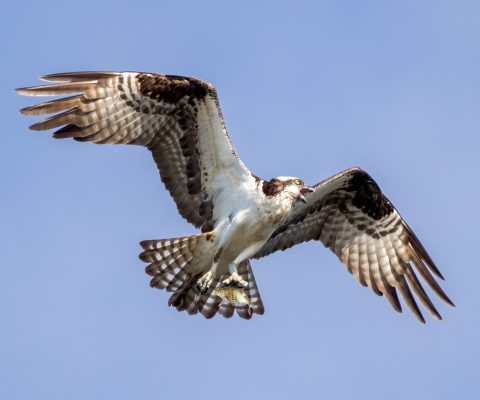
Owls, eagles and other raptors have hooked bills and very strong jaw muscles that help tear at their food.

Double-crested cormorant (Nannopterum auritum)

Evening grosbeak (Coccothraustes vespertinus)
Double-crested cormorants are common in the Sanctuary. We can see them diving for fish, using their large, webbed feet to propel them and their hooked bill to help capture their prey. During mating season, the males can be seen standing with its breast down and bill and tail up, trying to attract a female.
Small songbirds like the Evening grosbeak have short stubby bills. Much of their diet consists of seeds that have to be crushed before swallowing.

Black oystercatcher (Haematopus bachmani)

Pied-billed grebe (Podilymbus podiceps)
Black oystercatchers have a very prominent bill. It is common to see them foraging for mussels and limpets, using their bills to hammer or pry open the shell.
The small Pied-billed grebe can also be seen on Swan Lake. Like the Double-crested cormorants, they dive and capture small fish but on occasion can be seen with much larger prey. They use the hook on their bill and expandable jaw muscles to reposition the food.

Great blue heron (Ardea herodias)

Bald eagle (Haliaeetus leucocephalus)
Finally, the Great blue heron demonstrates the many different ways birds use their bills. We have all watched the patient heron standing motionless for what seems like an eternity before suddenly jabbing at their prey below the surface. The long bill helps probe and capture the awaiting meal.
Preening is very important for all birds to help keep their feathers clean. Herons often clean themselves one strand at a time. This process also helps distribute preen oil which protects the feathers. Some birds also shape their bills by rubbing them on a hard surface. Eagles and herons can be seen doing this on occasion.
Photo and Text Credit: Bruce Tuck | @BirdsInMyView
Submit your bird questions to visit@swanlake.bc.ca for a chance to have Bruce respond!

info@swanlake.bc.ca
Office Hours:
Mon - Fri: 9:00am – 4:00pm
3873 Swan Lake Road,
Victoria, BC, V8X 3W1
swanlake.bc.ca


We acknowledge the lək ̓ʷəŋən-speaking (Songhees and Kosapsum) Peoples on whose territory the Nature Sanctuary stands, and the lək ̓ʷəŋən and W̱SÁNEĆ peoples whose historical relationships with the land continue to this day.
We respect the vital relationships of First Peoples with these lands and waters for countless generations. We are honoured to receive Indigenous guidance and welcome collaboration in stewardship and appreciation of the Nature Sanctuary.